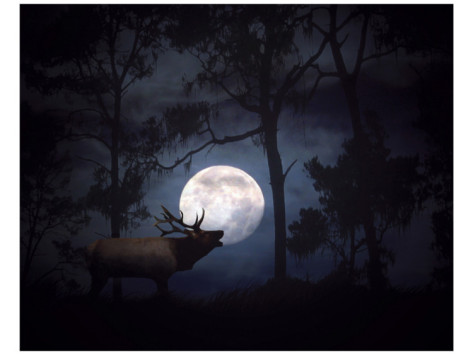
 "All Is Calm, All Is Bright" by photographer, Stephanie Laird
Christmas Eve wishes to all the Blue Ghost viewers- all 17,000+ from all over the world. Peace, Love, and Happiness to each and every one.
"All Is Calm, All Is Bright" by photographer, Stephanie Laird

 Urn (& Lights), 1945 by Walter Tandy Murch. Our family had this type of Christmas lights on our tree when I was young. I think this still life would make a good Christmas card...as the Christmas season is sometimes a little ambiguous.
 Self Portrait With Glasses, 1960.
 Well Chibley is a polydactyl cat with quite a story. She was the ship's cat for the tall ship, Picton Castle for almost 15 years. Miss Chibley Bits (her full name) was a member of the Picton's crew from the beginning, embarking on its first world voyage in 1997 after she adopted the ship's Captain, Dan Moreland. She logged over 250,000 sea miles and sailed around the world five times.
 The Picton Castle was built in 1928 and was named after a real castle in Pembrokeshire Wales. It was built as a fishing trawler, then used in WWII by the Royal Navy as a minesweeper. It was brought back to life in 1997 under Captain Moreland and now travels around the world as a working tall ship, conducting sail training voyages. It is based in Lunenburg, Novia Scotia. You can sign up to become part of the crew for 4 or 6 months, or as little as two weeks. They will be starting a new Atlantic voyage next year and will be stopping in Charleston, SC...probably for Harborfest.
 A picture of another polydactyl cat (not Miss Chibley) that really shows some extra toes.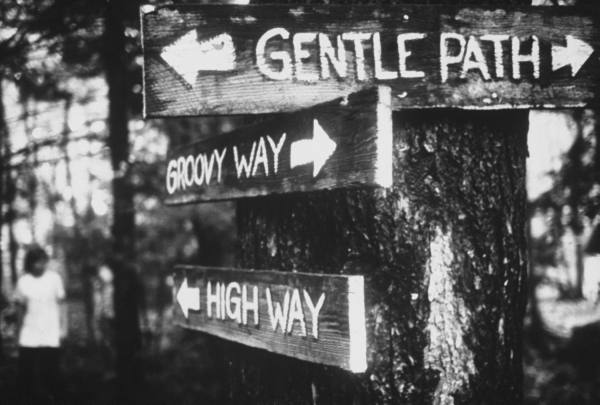
 Usually, I am just so glad to see poetry referenced or read that it matters very little what the reader finds in a poem. But enough is enough with this one and I feel we owe it to Robert Frost to at least try to get readers with the program here; after all, he was a man who worked hard at articulating big truths at a time when we were more concerned with perfecting the big lie. Also, Frost's message is so much better than the interpretation by those with an undiscerning eye who mistakenly use this poem to represent the encouragement of self-reliance and not following where others have led. His message is actually close to the opposite. Frost said himself "you have to be careful of that one; it's tricky-very tricky." But it is not so very tricky if you read it-really read it as poetry deserves to be read. There is no road less traveled and he tells us this plainly as he examines his paths saying they were really worn about the same...it will only become the less traveled road "somewhere ages and ages hence" when he tells his story with a "sigh." In other words, he knows right now that some time in the future he will give credit to the path he took as making all the difference, when actually it will probably make no difference at all. As an old man he will look back, decide to place importance on this particular decision in his life. He will try to explain and give a sense of order to his life-implying that his decisions made all the difference, when in fact, a lot has to be credited to chance and luck. Look at the title: the poem is about a man taking a path that he would describe later as the "one less traveled" yet the title of the poem is "The Road Not Taken" telling us that there was actually no less traveled road to take. If this explanation is not accepted, then one must bring forth Frost's actual words about this poem spoken at the Bread Loaf Writers Conference in 1953: "I wasn't thinking about myself there, but about a friend who had gone off to war, a person who, whichever road he went, would be sorry he didn't go the other. He was hard on himself that way." This friend was Edward Thomas whom Frost walked with in the woods near London. Frost explained that when they would walk, they would come to different paths and after choosing one, Thomas would always fret, wondering what they missed by not taking the other path. Thomas' evidently also suffered from an undiscerning eye and was unable to see that it really made no difference.
 Shopping with Snoop who knows how to pick those gifts that make it happen... I like to wear this one when I watch Toddlers and Tiaras. If it's fly, then buy.
 WeGlow International Light Up Fuzzy Pink Cowgirl Hat....Amazon $12.99.
 Cria, the Huaca. Huaca cames from the word "huacan" meaning to howl. Ancient Native South American worship often took the form of a howl or wail.
